
Case Study
Diocese Website Redesign
Reconnecting a nationwide Catholic Diocese through a complete digital overhaul
Overview
THe PROBLEM
TIMELINE
1 year (part-time)
TEAM
Sharon T. - UX/UI Designer & Project Manager
Bijo T. - Full-Stack Developer
TOOLS
Figma, Figjam, Figma AI, ChatGPT, Claude, Google Docs, Excel, Zoom, Heurio
MY ROLE
UX/UI Designer
Visual design, brand development, wireframes, high-fidelity wireframes & prototypes
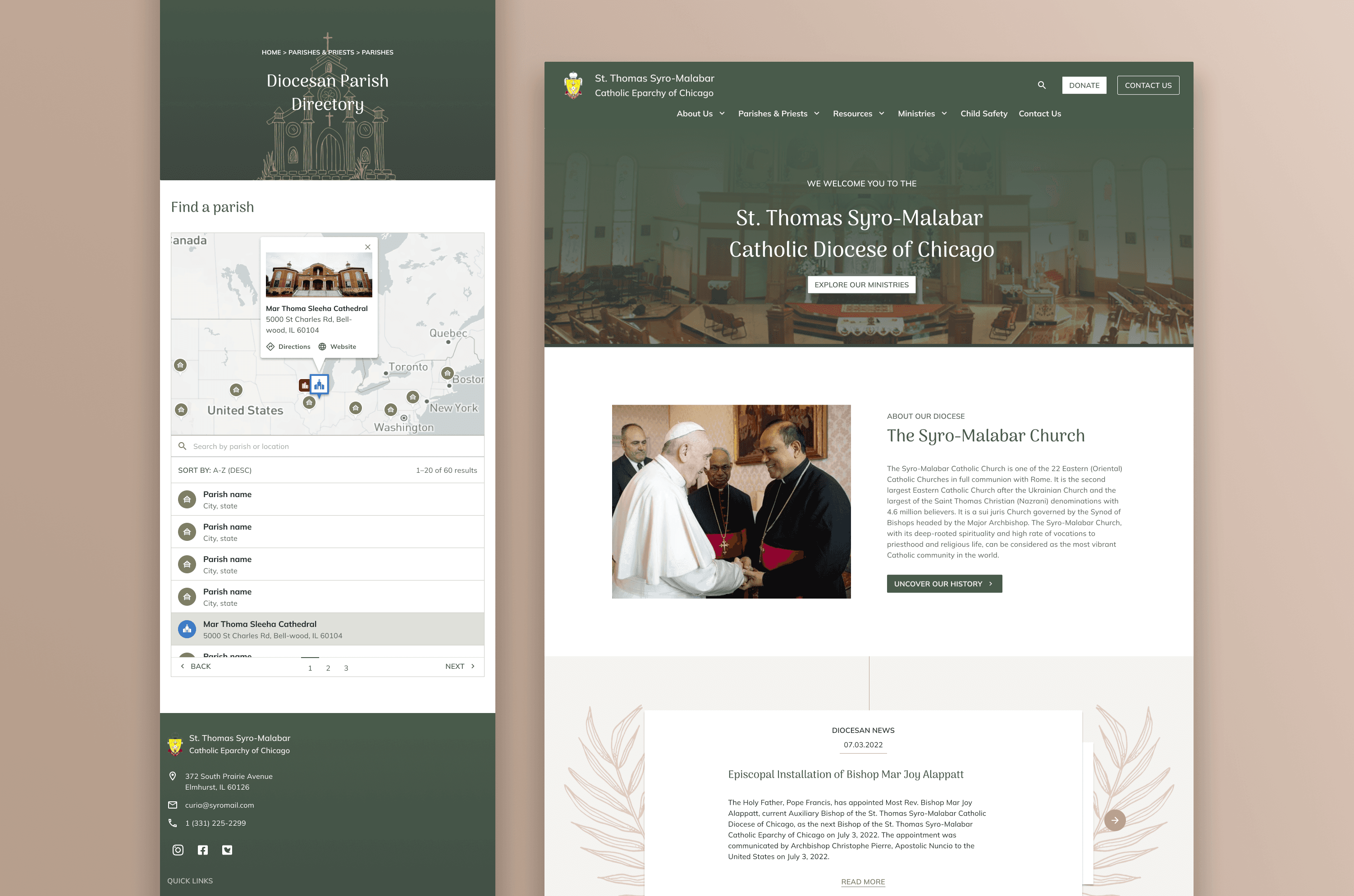
Solution Preview
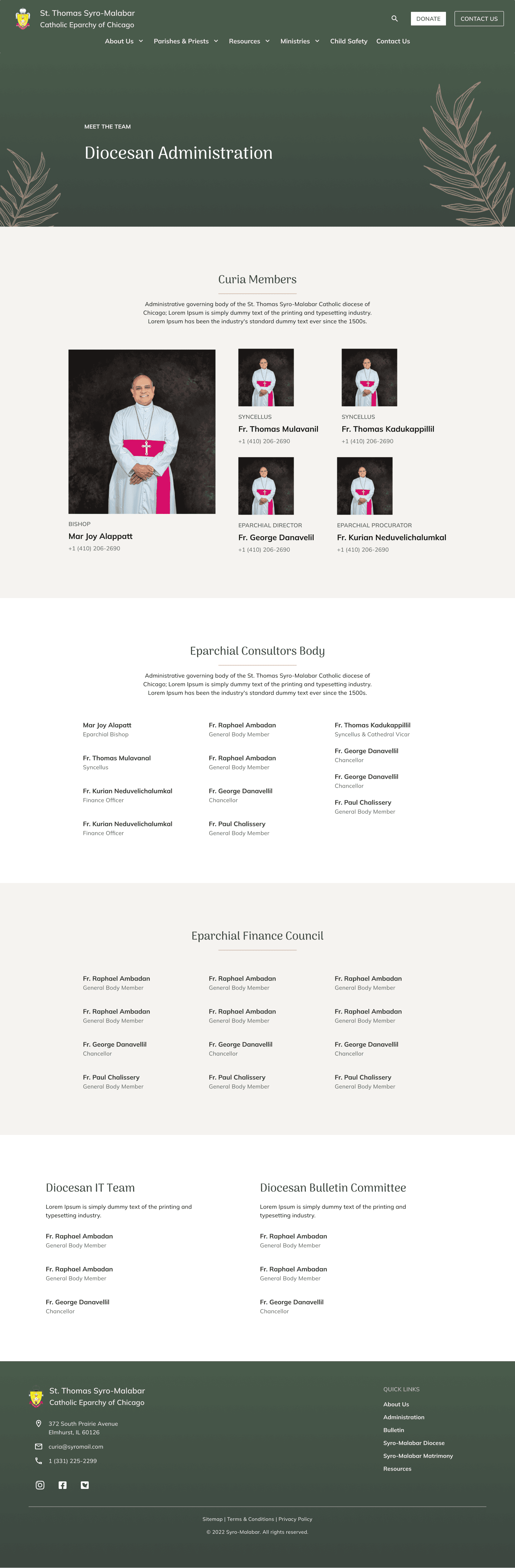
Old Website:
New Website:
Phase 1
Discover
Phase 1
Discover
Requirements & Scope
User Surveys
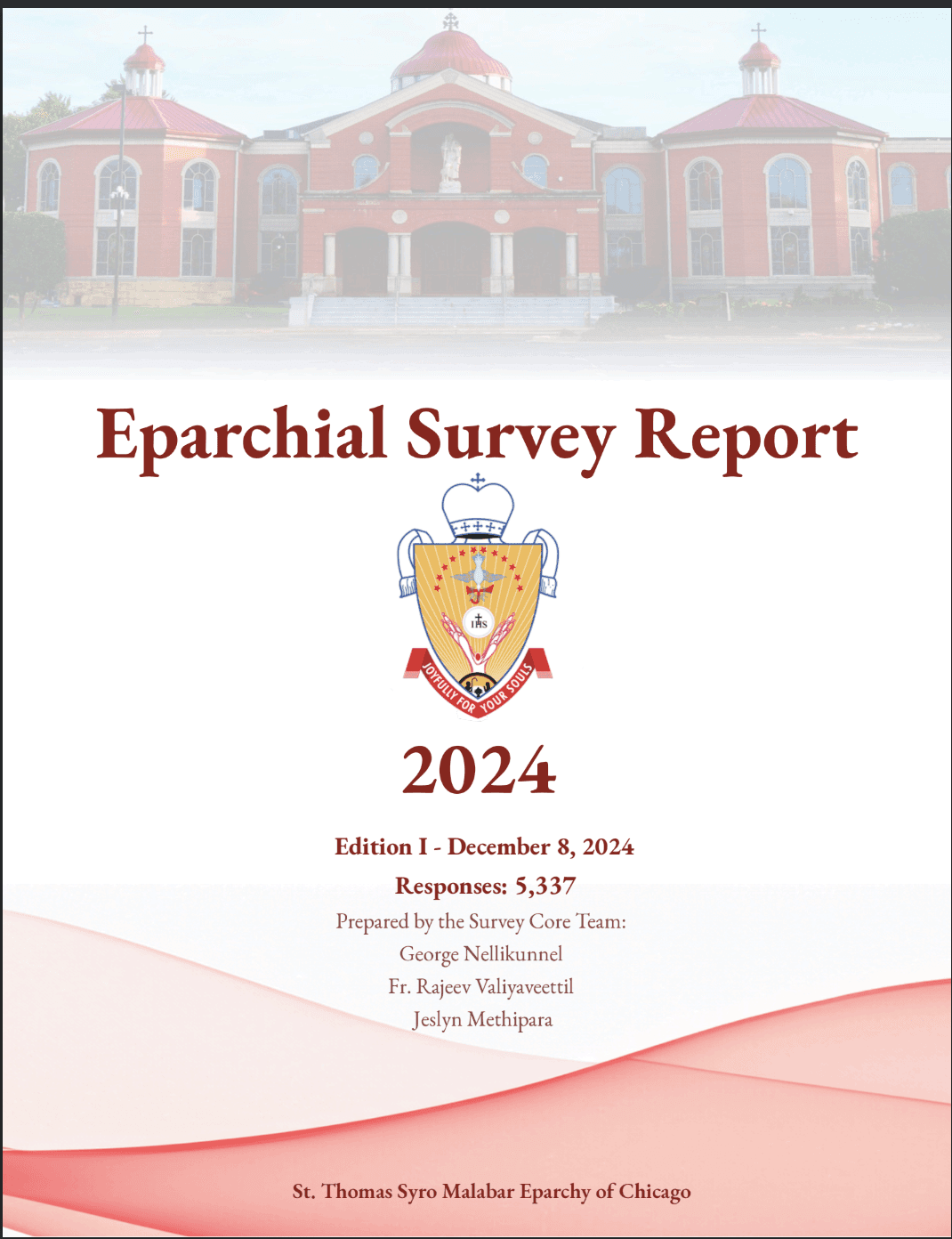
To better understand the needs of our ever-evolving community, the Syro-Malabar Catholic Eparchy of Chicago conducted a nationwide survey in 2024. It recieved 5,337 responses, spanning 85 parishes and missions across the entire U.S..
The survey captured feedback from a wide demographic range, including 36% youth and young adults (12–35), providing valuable insights into engagement, communication, and faith formation needs across the community.
Several recurring themes emerged that directly informed the website redesign strategy.
1. Younger generations are disengaging from parish life
A major concern identified in the survey was declining engagement among young adults and post-college parishioners.
Many respondents noted that youth often disengage after completing CCD programs in high school.
Respondents highlighted the need for more youth-focused programs, mentorship opportunities, and leadership roles.
The most frequently cited priority for the diocese was finding more effective ways to attract and engage young adults.
Design Takeaways:
Create digital pathways that help younger members easily discover ministries, events, and opportunities to stay involved in parish life.
2. Parishioners want clearer communication and transparency from leadership
Survey responses revealed a strong desire for better top-down communication from diocesan leadership.
Respondents requested:
clearer updates about diocesan initiatives
more accessible announcements and newsletters
greater transparency about decisions and finances
better channels for feedback and dialogue with leadership
Design implication:
Position the diocesan website as the central communication hub for leadership updates, news, and official information.
3. Important resources and events are difficult to discover
Parishioners expressed a need for easier access to information and faith resources, including:
prayer resources and devotional materials
faith formation and catechism resources
parish and diocesan events
educational content explaining church traditions
Design implication:
Improve information architecture and navigation so that parishioners can quickly locate resources, events, and educational materials.
4. Parishioners want stronger faith formation and community connection
While many families reported strong personal faith practices—89% reported regular family prayer at home—respondents expressed interest in deeper and more accessible faith formation opportunities.
Common requests included:
faith formation programs adapted to American culture
resources for parents and families
retreats, mentorship programs, and community-building activities
open forums for discussing faith topics
Design implication:
Use the website to surface faith formation resources, educational content, and community engagement opportunities more prominently.
Key Takeaway
The survey revealed that while the Syro-Malabar community remains deeply rooted in faith and family life, many parishioners—especially younger generations—struggle to stay connected to the church in the U.S. context.
The redesigned website therefore needed to:
improve discoverability of resources and events
provide clear communication from leadership
support faith formation and education
and help reconnect younger parishioners with the broader church community
Turning Interviews Into Insights
Requirements:
Do a full, end-to-end redesign of the Syro-Malabar Diocese of Chicago's website:
Define a clear brand identity and style guide for the Diocese website. It should complement the brand identity of the separate but related Chicago Cathedral website*
Improve the site's information architecture - Make resources and information easier to find.
Goals:
The overall objectives were simple: make it easier to understand what the Syro-Malabar church is, what the community offers, and make less involved members feel genuinely welcomed back.
Improve how we present our church's identity, history, and community–to parishioners and the public alike.
Create a more interconnected web between various Syro-Malabar parishes' websites and online channels.
Connect with youth: increase interest and value-ship.
Improve overall findability and discoverability of information.
Easy-to-find prayer resources + materials.
Make it easy for parish and ministry (i.e., sub-community organizations) leaders or representatives to publish new content onto the website when needed.
*Whereas this Chicago Diocese website would be for the entire U.S. church including all of its parishes, the Chicago Cathedral website was specifically for the Chicagoland community itself.
Users avoid using certain filters due to complexity or insufficient context.
Users are requesting multi-selection & “select all” in categorical fields
Heuristic Analysis
Auditing the Old Website
Problems:
Competitor Analysis
Phase 2
Define
User Personas
Information Architecture
Breaking Things Down:
Filter Data Types
User Flows for Each Data Type
Phase 3
Ideate
Our Ideation Process
Design Iterations
Phase 4
Preparing the User Test
User Testing Results:
Post-testing Revisions
Phase 5
Deliver
Reflections & Next Steps



Overview
Insight 1
Users avoid using certain filters due to complexity or insufficient context.
Insight 2
Users are requesting multi-selection & “select all” in categorical fields
Insight 3
Users want to use the search bar as an immediate way to filter
Insight 4
Main goal: Identify assets with abnormal data before things escalate.